The $2.56 Cheque: Donald Knuth and the Reward for Finding the Error
Since 1968 Donald Knuth has paid $2.56, one hexadecimal dollar, to whoever finds an error in his books. Cheques framed and never cashed.
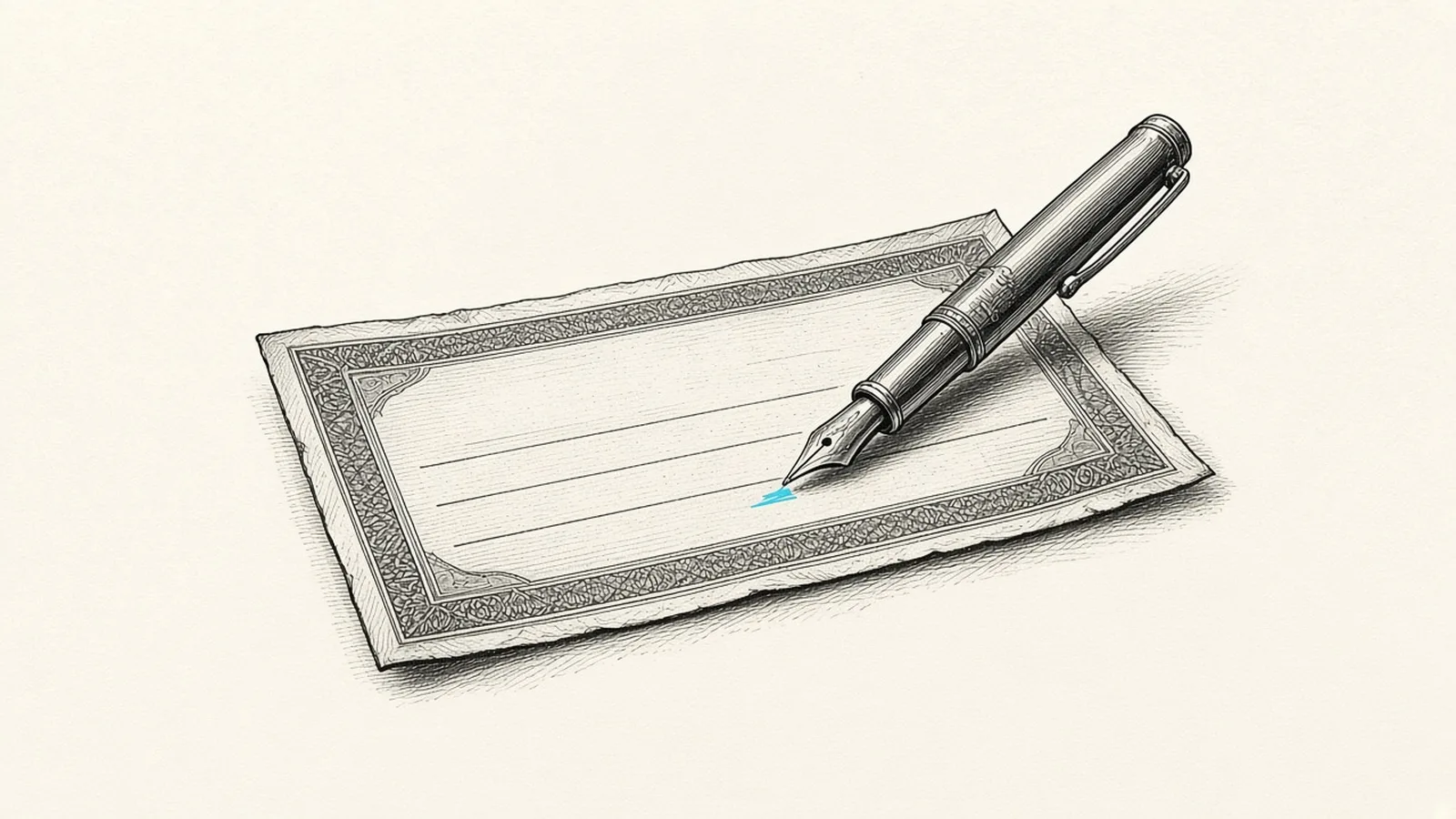
In 1968 Donald Knuth published the first volume of The Art of Computer Programming, and from then on he made an unusual promise for an author: he would pay anyone who found an error in his books. Technical, typographical or historical errors, as long as they were reported first. In recent editions the amount is $2.56. On his website Knuth explains the number with a programmer's joke: 256 pennies make one hexadecimal dollar. A valuable suggestion is worth 32 cents, one eighth of an error.
A cheque with a page number
For decades the reward came by post, as a real signed cheque. The memo line carried the exact address of the mistake: "1.23", for instance, means page 23 of Volume 1. In October 2001 Knuth reported having written more than two thousand of them, with an average value above eight dollars. Almost nobody cashed them. People who received one of those slips framed it, because the value lay not in the amount but in the proof: in a text checked with such care, that person had seen something the author had missed.
For the TeX and Metafont programs the rule was different: the reward for a bug in the code started at $2.56 and doubled every year, up to $327.68. The older the program grew, the more it cost to find a flaw in it, and the more worthwhile it was to look. In October 2008, because of cheque fraud, Knuth stopped sending real cheques. In their place he opened the Bank of San Serriffe, in the imaginary country of San Serriffe, which keeps an account for everyone who has found an error since 2006 and sends out "hexadecimal certificates". The bank's page, updated to 21 June 2026, lists hundreds of names with balances such as 0x$1.00, and notes that one hexadecimal dollar is worth 2.56 US dollars.
The price you put on a mistake
In the essay The Builder Operating System I describe a builder's work as a set of checks that keep working even when attention drops. Knuth's cheque is one of those checks, turned outward. It does not ask readers to trust the book: it invites them to correct it, and puts in writing that every correction is a gift. The error stops being a shame to hide and becomes a line in a register, with a date, a page and a name.
Knuth himself knew the limit of any check done alone. In 1977 he ended a memo sent to Peter van Emde Boas with a sentence that became famous: "Beware of bugs in the above code; I have only proved it correct, not tried it." It is the same insight as the rubber duck: whoever writes sees the work as they meant it, not as it is. Another pair of eyes is needed, and it pays to make that look worth giving. A $2.56 slip, framed and never cashed, is a small object that keeps this in mind: a text becomes reliable only when someone has permission, and the wish, to find its mistakes.
Sources: Donald E. Knuth, Frequently Asked Questions; Donald E. Knuth, The Bank of San Serriffe (balances as of 21 June 2026); Wikipedia, Knuth reward check, citing D. E. Knuth, "All Questions Answered", Notices of the AMS 49(3), 2002 (accessed 2 November 2026).
> ln -s ./linked-nodes
- [PART OF] Builder Operating System
- [RELATED] The Builder Operating System
- [RELATED] The Rubber Duck: Explaining Code to Someone Who Doesn't Answer