The reboot
After the collapse, the world does not end. It restarts in a simplified form. Technology becomes rite, symbol, legend.
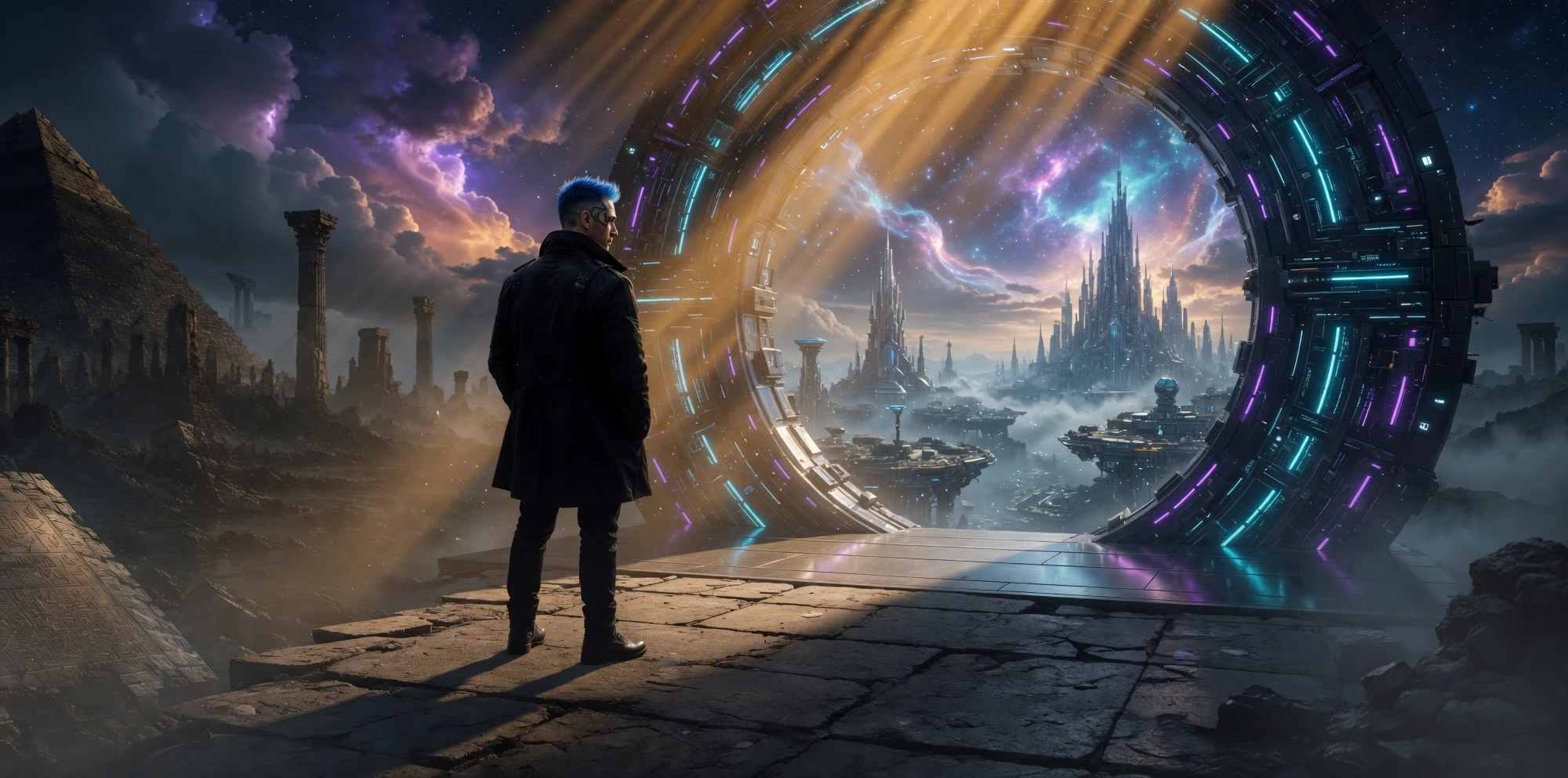
The reboot is not the end of the world.
It is its degraded restart.
This distinction matters. The apocalyptic imagination tends to think in absolute terms: everything ends, everything burns, everything disappears. But history, real or mythical, often suggests something different. Civilizations can collapse without erasing every trace. They can lose continuity, not matter. They can lose instructions, not objects.
A world of shells
After the collapse, something remains.
Buildings without function remain. Roads without traffic. Machines without energy. Archives without readers. Code without compilers. Passwords without systems. Antennas without signal. Manuals without language. Procedures without context.
The survivors inherit a world full of shells.
The reboot begins when these shells are reinterpreted.
Technology as rite
An interface becomes an altar. A piece of code becomes a formula. A key becomes an amulet. A server hall becomes a sacred chamber. A protocol becomes law. A machine becomes a creature. An engineer becomes a mythical figure. A technical catastrophe becomes divine punishment.
Not because human beings are stupid, but because they have to produce meaning with what remains. Myth is not pure ignorance. It is a technology of memory when technical explanation is no longer available.
In this sense, the reboot is not only material. It is semantic.
The world is restarted with a poorer vocabulary. The same forms remain, but they change category. What was infrastructure becomes landscape. What was a command becomes a ritual. What was security becomes a taboo. What was maintenance becomes worship.
The key as amulet
Imagine a future community that finds an old hardware authentication device. No system recognizes it anymore. Nobody knows it was used to access an account. But the object is small, solid, precise, different from common stones and metals. It could become a talisman. A symbol of access. A "key" in the most ancient and most spiritual sense of the word.
Now imagine that community finds thousands of technical pages, but no longer has the context to read them. A few words survive: root, token, cloud, protocol, chain, seed, oracle. Technical terms that already today carry an almost mythological force. In a world after the collapse, they could become sacred names.
Perhaps the reboot is precisely this: the transformation of the technical into the ritual through the loss of context.
Technology becomes myth not when it is too advanced, but when it becomes unreadable.
Already living inside the myth
This concerns us more than it seems. Even today many people live inside systems they do not understand. They use words like cloud, algorithm, AI, blockchain, cryptography, neural network, model, token. Sometimes they use them technically. Sometimes symbolically. Sometimes as formulas of trust or fear.
The reboot is not only a future event. It is a possibility always present in any culture that uses more technology than it can explain.
After the collapse, civilization does not start from zero. It starts again from fragments.
And fragments are not neutral. They carry forms, suggestions, emotional power. A pyramid does not need to function in order to dominate the imagination. A switched-off data center, if it survives long enough, could do the same.
The question of Reboot is then simple and dizzying: which of our technical objects already have the shape of myth?
Perhaps many.
Perhaps we are already building the symbolic ruins of the future while we still use them as tools of the present.
> ln -s ./linked-nodes
- [PART OF] The Machine, the System, the Eras, the Frequency, the AI
- [PART OF] Technological Mythology
- [REFERENCED BY] The Machine, the System, the Eras, the Frequency, the AI