The civilization that remembers
Reboot's final question: can we be the first civilization able to recognize the cycle before repeating it?
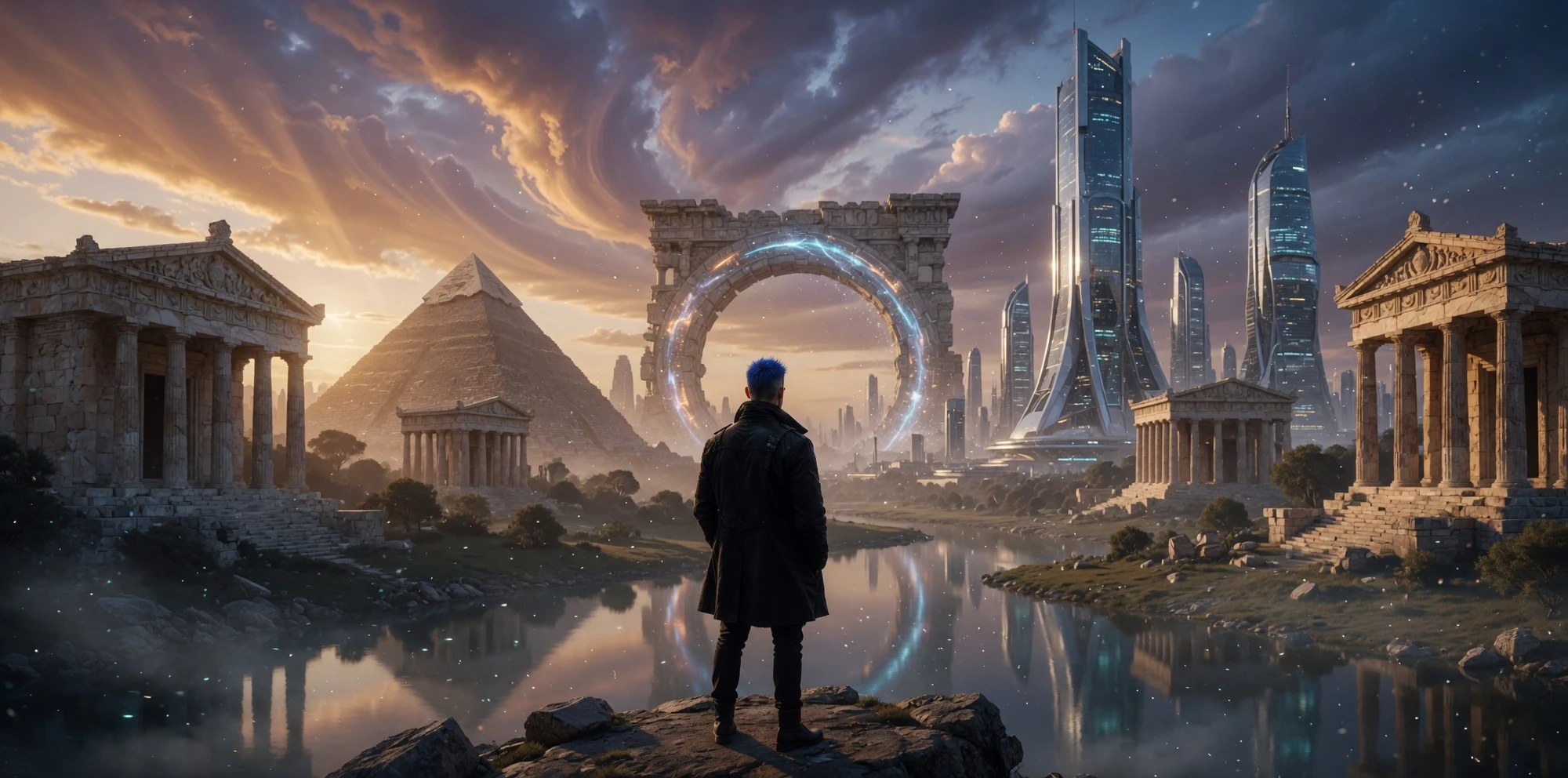
The final question of Reboot is not whether Atlantis really existed.
It is not whether the pyramids hide a lost technology. It is not whether advanced civilizations existed before us, erased by some collapse. These questions belong to the fascination of mystery, and mystery has its place. But the heart of Reboot is closer and more urgent.
The real question is: can we avoid becoming a forgotten civilization?
Because everything we imagine about lost civilizations could one day be imagined about us. Our skyscrapers, our satellites, our data centers, our fiber networks, our digital archives, our blockchains, our artificial intelligences. Everything that seems obvious today could become opaque.
We feel modern because our machines work. But perhaps every civilization, before its own reboot, felt modern.
Remembering is not refusing
The civilization that remembers is not the one that refuses technology. It is not a nostalgic, primitive or frightened civilization. It is one that understands that technical power must be accompanied by memory, maintenance, culture and limits.
To remember means keeping systems readable. It means not confusing comfort with understanding. It means building infrastructures that can be interrogated, repaired, passed on. It means not delegating every important decision to opaque processes just because they work.
To remember also means recognizing the mythological power of machines.
Machines become culture
An artificial intelligence is not just software if millions of people start consulting it as an oracle. A blockchain is not just a distributed database if it becomes a promise of sovereignty, wealth, identity and belonging. A data center is not just a technical building if it concentrates memory, computation and power at a planetary scale.
Machines become culture. And when they become culture, they demand cultural responsibility.
Perhaps this is what many civilizations did not understand in time: knowing how to build fire is not enough. You also have to build the stories, the rules and the institutions that can keep it from burning everything.
Threshold technologies of our time
Our time is crossed by threshold technologies: artificial intelligence, biotechnologies, automation, predictive systems, planetary networks. Each promises progress. Each produces dependency. Each amplifies civilization, but also its fragilities.
The civilization that remembers is the one that learns to see the cycle.
Rise. Machine. Threshold. Delegation. Collapse. Forgetting. Myth. Rebirth.
Seeing the cycle does not mean being condemned to repeat it. It means having, perhaps for the first time, the possibility of interrupting it.
The two lives of every machine
To do that, we have to stop treating technology as something that belongs only to engineers or markets. Technology also belongs to philosophy, politics, art, collective memory. It belongs to the stories a civilization tells about itself.
Because in the end, every machine has two lives.
The first is operational: what it does.
The second is mythological: what it means.
A civilization truly survives only if it manages to safeguard both.
Perhaps we are not the first civilization to build tools larger than our own wisdom. But we could be the first to understand it in time.
And this, perhaps, is the true beginning of Reboot.
> ln -s ./linked-nodes
- [PART OF] The Machine, the System, the Eras, the Frequency, the AI
- [PART OF] Technological Mythology
- [REFERENCED BY] The Machine, the System, the Eras, the Frequency, the AI