The Lever Nobody Pulled: the 1935 Flight That Invented the Checklist
On 30 October 1935 the B-17 prototype crashed with its tail controls locked. From that lapse of memory came the flight checklist.
On 30 October 1935, at Wright Field near Dayton, Ohio, the US Army rolled out the prototype of a four-engine bomber. It was the Boeing Model 299, the aircraft that would become the B-17. At the controls were experienced pilots: Major Ployer P. Hill, Lieutenant Donald Putt as co-pilot and, standing between them, Boeing test pilot Leslie Tower. The aircraft taxied, the engines went to full power, it left the ground. Then the nose began to rise more than it should. The pilots pushed the control column forward, with no effect. A few hundred feet up the aircraft stalled, fell back and burst into flames. Hill and Tower died of their injuries.
Nothing had broken. On 15 November the board of inquiry put it precisely: no structural failure, no fault in the four engines, the control surfaces or the autopilot. The elevator and rudder had stayed locked.
A lever nobody pulled
The Model 299 was the first aircraft whose tail surfaces could be locked from the cockpit. The lock was for the ground, so the wind would not batter them while the aircraft was parked, and a dedicated lever released them before takeoff. That day nobody pulled it all the way. Not the pilot, not the co-pilot, not the test pilot standing between them. Putt, who survived, told it many years later in one dry sentence: "When we taxied out, for some reason we were in a hurry. Those were the days before the checklists."
The lesson the Air Corps drew was not "we need better pilots". They already were the best. It was something else: that aircraft had too many steps to be left to memory, even the memory of people who knew it well. So crews began to carry a card with the steps written in order, to read and tick off. The B-17 flight manual, during the Second World War, warned that the aircraft was too complex for even an experienced pilot to memorise, and called the checklist the "only sure safeguard" against error.
The card of those who write and build
It interests me because the checklist is not a brilliant idea. It is almost a humiliation: admitting in writing that skill is not enough, that hurry always finds a lever to forget. That is exactly why it works. It does not ask you to remember better, it asks you not to have to remember.
People who write and build have their own tail locks. A link pointing to the wrong page, a forgotten translation, a title too long for search engines, an image with no alternative text. None of these brings down an aircraft, but each one, when it slips through, shows in public. That is why posts on this blog are not published when they look ready, but when an automated check no longer finds anything to report. That is a card too, only a machine reads it.
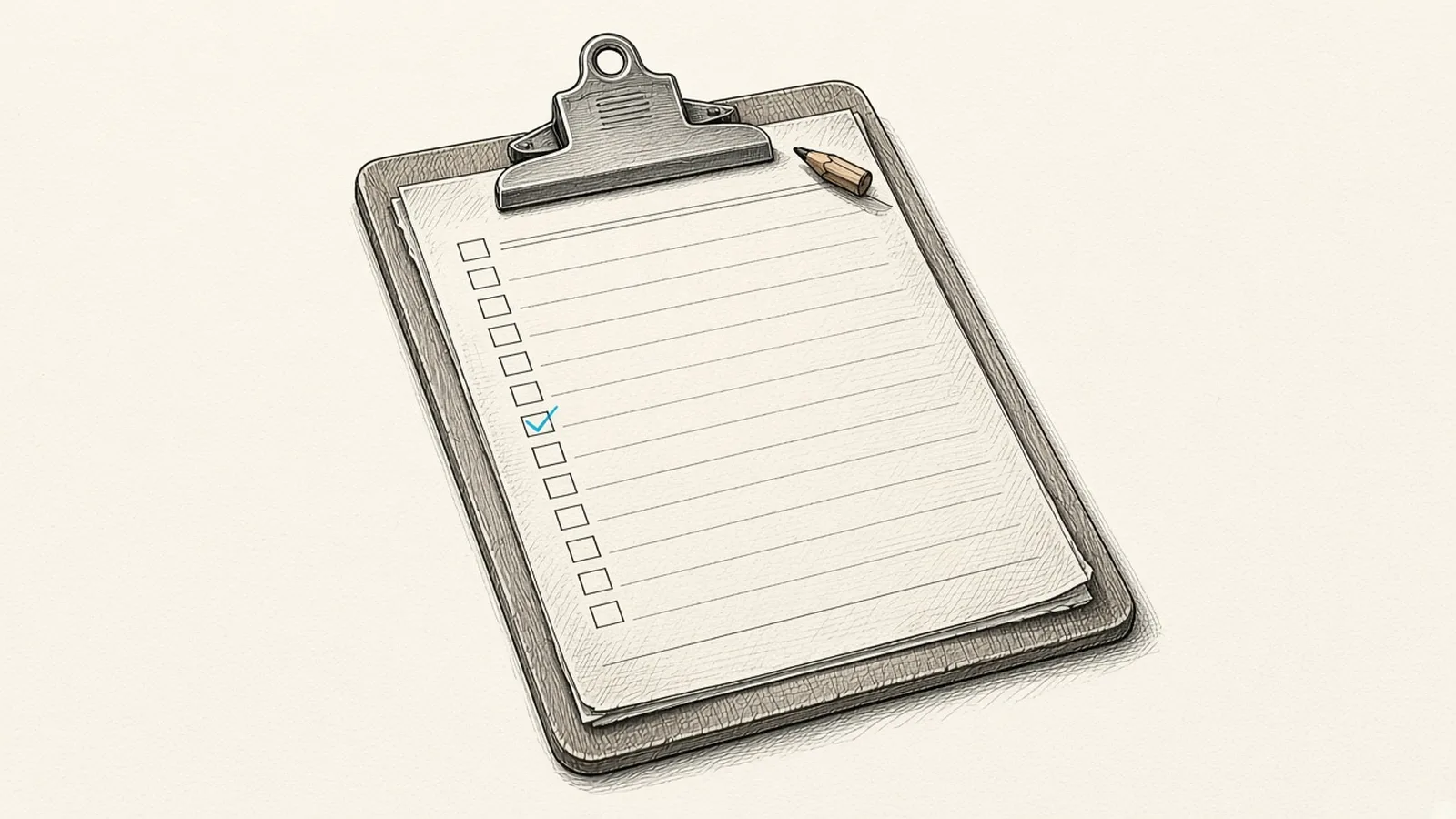
The essay The Builder Operating System talks about structures that preserve state and let processes coexist without destroying one another. The checklist is the smallest of those structures: a page of lines and empty boxes. Before 30 October 1935 that card did not exist. Afterwards, nobody again thought a good pilot could do without it.
Sources: Where did checklists come from?, Air Combat Command, U.S. Air Force; Model 299 Crash, National Museum of the United States Air Force; On. Set. Checked., Air & Space Quarterly, Smithsonian National Air and Space Museum, winter 2023 (accessed 24 October 2026).
> ln -s ./linked-nodes
- [PART OF] Builder Operating System
- [RELATED] The Builder Operating System
- [REFERENCED BY] The Computer in the Blanket: the Copy That Saved Toy Story 2