Hang in there until 2030: the myth of eternal youth has a new machine
In 1773 Franklin dreamed of a cask of Madeira to wake up a century later. Today the same hope has an algorithm in place of the cask.
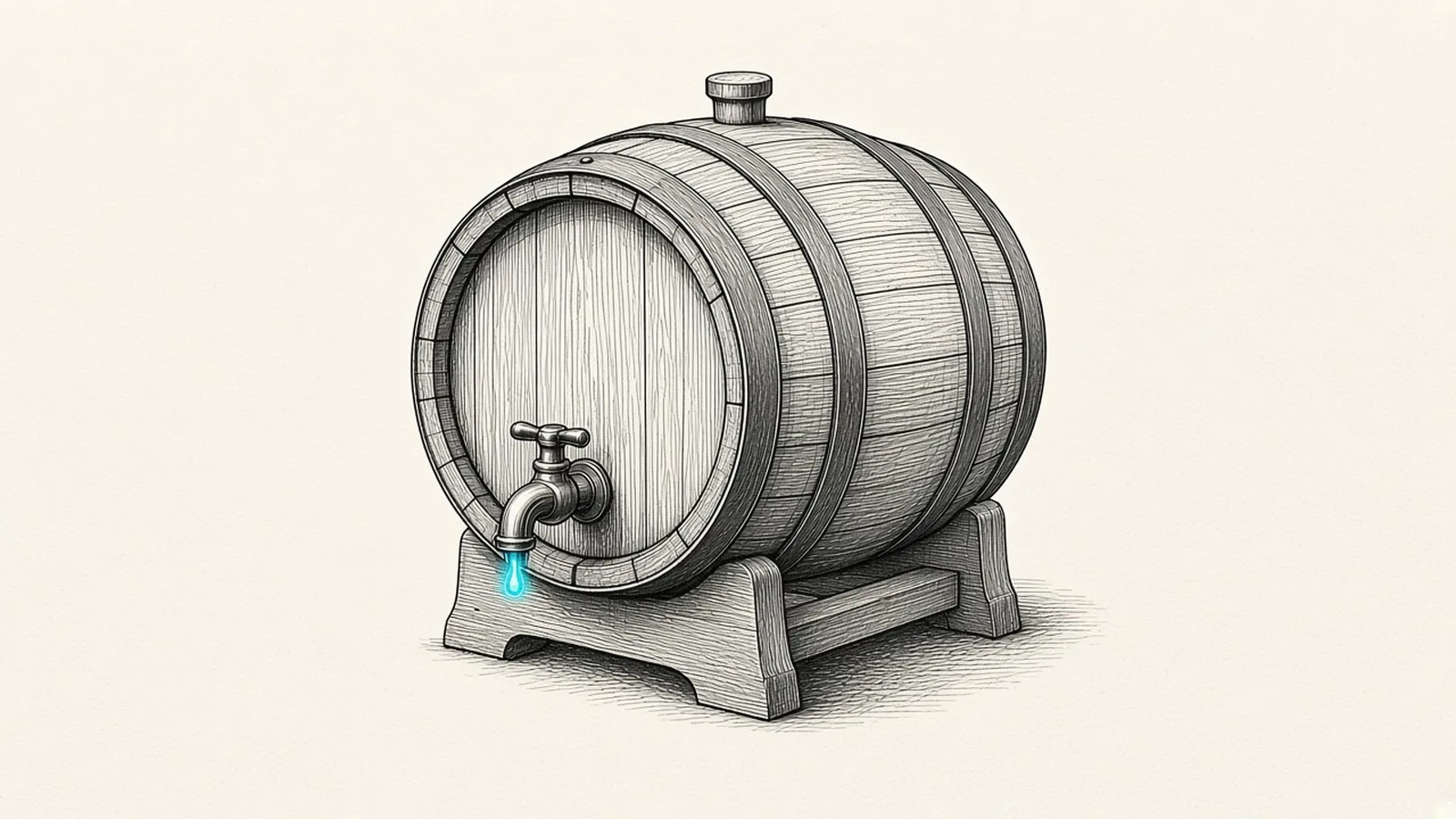
In the spring of 1773, in London, Benjamin Franklin wrote to his friend the physician Jacques Barbeu-Dubourg a letter that speaks, among other things, of three flies. They had drowned in a bottle of Madeira bottled in Virginia and shipped to England, and they fell into the first glass poured at a friend's house. Franklin had them set out in the sun on a sieve. In less than three hours two of them stirred, wiped their eyes with their forelegs, brushed their wings and flew away, "finding themselves in old England without knowing how they had come there". The third, at sunset, was thrown away.
Then comes the sentence that matters. Having an extreme desire to see the state of America a hundred years hence, Franklin writes that he would prefer, to an ordinary death, to be shut up with a few friends in a cask of Madeira until that time, "to be then restored to life by the warmth of the sun of my dear country". And at once he corrects himself: we perhaps live in an age too little advanced, "too near the infancy of the sciences", to see such an art brought to perfection. For the moment he will content himself with what his friend has promised him: the resurrection of a chicken or a turkey.
It is a joke, and it is also the oldest of wishes. In the epic of Gilgamesh the king of Uruk goes down to the bottom of the waters to pick the plant that gives back youth; while he bathes in a pool, a serpent smells its fragrance, carries it off and sheds its skin. The myth does not explain why we grow old. It puts an object in the hero's hand, and takes it away.
The same cask, a different machine
On 19 October 2026 a user on X who signs himself Dr Singularity, and whose profile announces artificial general intelligence by 2030, wrote a sentence that anyone with ageing parents will recognise: it hurts to watch them grow old and get weaker every year, and he tells them to hang in there a few more years, until around 2030, because great rejuvenation for everyone is coming. There is nothing to mock here. There is a child's love and the fear of arriving too late. But it is Franklin's letter with a different date: we ask the people we love to wait inside the cask until the sun of a more mature science sets them back on their feet. In place of the Madeira there is an algorithm. Whether and when medicine will truly reverse ageing, nobody knows today.
The point, for anyone who reads history as a succession of civilizations that forget themselves, is not whether the promise is true. It is what the promise does to those who receive it. A civilization that entrusts its salvation to a machine that does not yet exist begins, almost without noticing, to neglect the ones it already has: archives left to the damp, media nobody can read any more, people who have no time to wait. The future becomes a waiting room, and nothing is built in waiting rooms. Franklin, at least, knew this: his cask was an image, and the next sentence went back to the chicken and the turkey, to what could be done right away.
What can be done before 2030
Parents do not live in 2030. They live now, in a kitchen, with a voice that has a precise inflection and that no model will be able to rebuild if nobody ever recorded it. While we wait for the machine, we can do something more modest and more certain: sit beside them and record an hour of stories, digitise the photographs with the names written on the back, film their hands as they knead dough or fix something, and keep it all in a way that outlives phones, accounts, even ourselves. It is the work I write about in the Digital Custody Notebooks, starting with the first, The Custody: deciding what deserves to last and giving it a place to last. And it is the question behind Reboot: what remains of a civilization when it stops keeping.
Franklin's cask was never filled. His letter, on the other hand, has reached us: Barbeu-Dubourg translated it into French and printed it in Paris that same year, and today we read it in that version, because that is the one someone kept. It is the only kind of return we can be sure of.
Sources: B. Franklin to J. Barbeu-Dubourg, [end of April 1773?], extract in French translation in Œuvres de M. Franklin, Paris 1773, in The Papers of Benjamin Franklin, vol. 20, pp. 189–190, Founders Online (quotations translated from the French); Epic of Gilgamesh, tablet XI; post by @Dr_Singularity on X, 19 October 2026.
> ln -s ./linked-nodes
- [PART OF] Technological Mythology
- [PART OF] The Machine, the System, the Eras, the Frequency, the AI
- [RELATED] The Custody